
Applications of Spatial Biology
Discovery starts with context. Vizgen’s spatial multiomics links molecular detail to tissue architecture, turning static samples into living maps of biology across disciplines, from neuroscience and oncology to countless other areas of research.
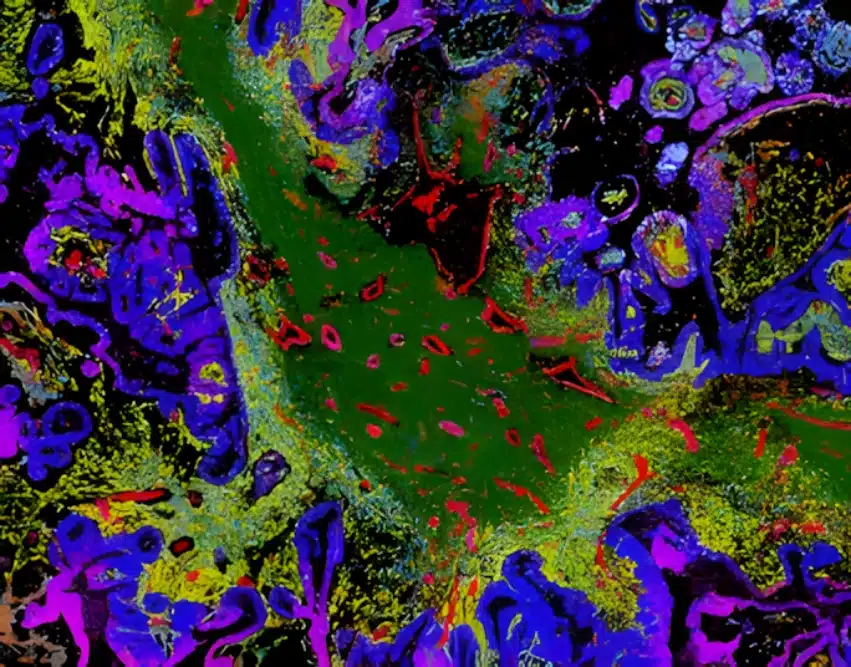
Applications
Neuroscience
Oncology
Immunology

Proven Across a Wide Range of Tissues
Proven across human, mouse, and model organisms including primate, fish, plant, and axolotl samples.
From brain and heart to kidney, tumor, and immune tissues, researchers capture RNA and protein expression in native architecture with single-cell resolution, supporting translational and discovery-scale studies.
Compatible Workflows for Real Samples
Analyze FFPE and fresh-frozen sections, tissue microarrays, and whole-slide regions with standardized imaging and analysis.
Robust chemistry and panels support low- to high-plex readouts for spatial transcriptomics applications and multiplex immunofluorescence, enabling cohort-scale comparisons across organs, disease stages, and experimental conditions.

How Our Technologies Power Applications
MERFISH 2.0 on the MERSCOPE Ultra platform resolves tens of thousands of RNA targets per sample at true single-cell resolution, revealing cell states and spatial organization.
InSituPlex multiplex immunofluorescence quantifies protein markers on the same types of specimens, including FFPE.
Together, these technologies deliver true multiomics that turn static sections into actionable spatial biology for neuroscience, tumor profiling, immune research, and many more fields of research.